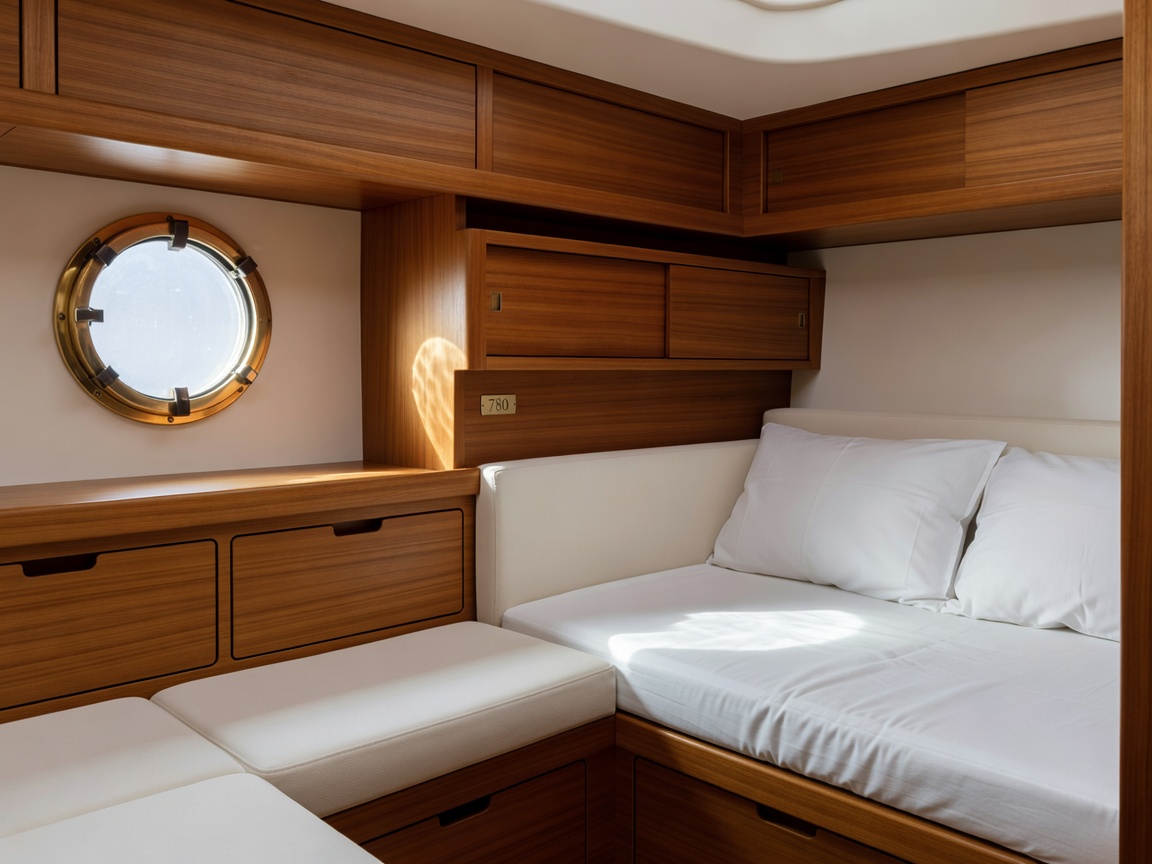
Accommodation formats
Yacht accommodation is not one standard product. A stay may be based on a sailing yacht, a motor yacht or another vessel configured for overnight use. The vessel affects space, movement, storage and how a day is organised. Ask for the actual cabin plan and a clear description of what spaces are shared. A broad category label cannot confirm a particular layout.
A sailing yacht can suit travellers who want a sailing-led itinerary and are comfortable with compact spaces and a closer connection to the vessel’s operating routine. A motor yacht may offer a different arrangement of interior and deck space, but size alone does not prove comfort, privacy or suitability. Compare the vessel’s usable spaces, not just its headline dimensions.
Quick comparison
Sailing-led stay: often centred on route, wind and shared onboard routines. Confirm sleeping arrangements and access to facilities.
Motor-yacht stay: may prioritise a different balance of indoor and outdoor areas. Verify noise, privacy, access and layout for the selected vessel.
Cabins, privacy and shared space
Count the cabins, then examine their arrangement. Check whether each cabin has a private bathroom or uses shared facilities. Ask how berths are configured, whether any sleeping area is convertible and whether cabins have independent access. These details affect privacy more than a simple passenger count.
Shared spaces can include a salon, cockpit, deck or dining area. They may be used for meals, reading, route conversations and storage during the day. Establish which areas are available to your group and whether crew accommodation changes access. Onboard privacy is shaped by both the layout and the people sharing it.
For families, consider safe movement around the vessel, supervision needs, sleeping proximity and how easily children can reach shared spaces. For mixed-age groups, check steps, thresholds, narrow passages and the distance between sleeping and bathroom areas. Anyone with mobility needs should discuss access using specific questions and request clear information; a yacht layout may not provide step-free movement.
Routines and storage
Living aboard requires a small adjustment. Space is shared. Wet items need somewhere to dry, footwear may be managed differently and quiet time can depend on the group’s routine. Ask how meals are organised, what the daily schedule typically involves and which tasks guests are expected to handle. Confirm any crew arrangements directly with the responsible provider; this guide does not represent a charter service.
Pack soft-sided luggage where possible. It is easier to stow than rigid cases in compact cabins. Bring a small day bag, practical layers, sun protection and any personal medication. Keep valuables and documents in a secure, accessible place. Exact packing needs depend on the season, itinerary, vessel rules and services confirmed for the trip.
Yacht or land accommodation?
A yacht can combine overnight accommodation and travel between coastal stops. That can reduce repeated packing and make a changing route part of the experience. The trade-off is a smaller living area, vessel-dependent facilities and a schedule affected by operational decisions. A hotel or apartment may offer more fixed space, easier separation between rooms and less need to coordinate daily movement.
Choose a yacht stay when time afloat and access to changing coastal settings are central to the trip. Choose land accommodation when stable room layouts, broad accessibility or independent schedules matter more. A mixed itinerary can also work: spend some nights ashore and use a yacht for a defined section. No format is automatically better for every group.
What affects the total cost?
Do not compare a yacht stay using an assumed nightly figure. Costs may vary with vessel type, size, season, trip duration, crew requirements, marina costs, fuel, provisioning, transfers and additional services. Request a written breakdown from the relevant provider and check what is included, excluded and variable. Availability and terms can change. This site does not publish live rates or confirm vessels.
Good for
Travellers who value the journey between stops, groups able to share compact spaces and guests prepared to follow vessel-specific routines. It can also suit people planning a coastal itinerary around time aboard rather than a single fixed base.
What to know
- Request a vessel-specific cabin and berth plan.
- Confirm shared facilities, crew access and storage before committing.
- Match the layout to group size, ages, mobility and privacy needs.
- Check what is included, what costs extra and which details remain variable.
These are general planning points, not an assessment of a particular vessel. Verify all current travel and operational details with the responsible provider.